
Memory Palaces for NEET Biology, UPSC Polity, and CAT GK: When the Method of Loci Actually Works
The memory palace is one of the oldest, most well-documented memory techniques in recorded history — 2,400 years of empirical use, 60 years of formal research, and one specific set of cognitive tasks where it produces dramatic gains over conventional study methods. It's also one of the most over-applied techniques among Indian aspirants, with students building elaborate palaces for material that's better learned other ways. This post is the honest scope-mapping: where memory palaces actually work for NEET / UPSC / CAT prep, where they don't, and the protocol that produces real gains within their scope.
What the technique actually is
The memory palace — formally the method of loci — is described in Cicero's De Oratore (55 BCE) as a technique already old in Cicero's time, attributed to the Greek poet Simonides of Ceos around 500 BCE. The mechanic is straightforward: pick a real, well-known location (your home, your school, your daily commute), mentally walk through it in a fixed sequence, and place each item you want to remember at a specific spot along that path. To recall the items, you mentally re-walk the path and pick up each item from where you placed it.
That's the entire technique. The mechanic is simple. What's surprising is how disproportionately it works.
The scientific story is by now well-established. fMRI studies of world memory champions — the people who can memorise the order of multiple shuffled decks of cards in minutes, recite thousands of digits of pi from memory, or recall lists of hundreds of nouns — consistently show that these individuals are not anatomically unusual in the regions associated with general memory. They are, however, recruiting the spatial-navigation regions of the brain (specifically the hippocampus and surrounding regions) at much higher levels than non-experts during memory tasks. Their brains have been trained, through years of practice, to convert non-spatial information (a sequence of digits, an order of cards, a list of words) into spatial information (objects placed along a remembered path).
This conversion is the entire trick. The human brain has structurally massive memory capacity for spatial layouts — you can recall the layout of your childhood home effortlessly even decades later — but very limited capacity for arbitrary sequential information. Memory palaces hijack the spatial system to do the work that the sequential system can't.
In controlled experiments on novices, the technique reliably produces 2–3x gains on list-recall and sequence-recall tasks within a few weeks of practice. The gains are large enough to be obviously useful for any task that maps cleanly onto list recall.
The honest scope: where memory palaces beat alternatives
The technique is sharp. It works dramatically well for some kinds of material and produces no gains for others. The scope-mapping for Indian exams:
Where memory palaces win clearly
Position-locked sequential facts. The order of US Presidents, the order of Mughal emperors, the sequence of Indian Prime Ministers. The recall task is "what's the 7th item in this list?" or "what comes after item X?" — exactly the recall pattern memory palaces are built for.
Glossary-style classification. The 11 phyla of the animal kingdom in NEET Biology. The 8 schedules of the Indian Constitution. The classes of antibiotics. Material that's structured as discrete labelled items where you need to recall each one without prompting.
Date-locked historical events. "What happened in 1857?" "What happened in 1942?" These are sequence-recall tasks dressed as conceptual questions, and the palace approach (placing the year-event pair at a specific location) accelerates retrieval substantially.
Bone-and-muscle anatomy in NEET Biology. Particularly the appendicular and axial skeletons, the cranial nerves, the layers of the digestive tract, the parts of the nephron. These are list-shaped facts where order or position matters.
Long lists of bilateral / multilateral organisations for UPSC International Relations. The members of OPEC, the founding members of NATO, the BRICS expansion timeline. List-shaped, recall-driven, exactly the right shape for a palace.
Periodic table for NEET / JEE Chemistry. The order of elements, especially within groups. The technique excels here because the recall pattern is "what's the third element in group 7?" — a position-recall question.
Vocabulary and quotations for CAT VARC and English. A list of 200 high-frequency words, or a set of memorable quotations to use in essays. Both are list-recall tasks where the technique compounds well.
In all of these cases, the technique reliably outperforms alternatives like flashcards or pure repetition by margins large enough to be worth the construction-time investment.
Where memory palaces don't help
Conceptual understanding. "Why does this chemical reaction proceed in this direction?" "How does this constitutional doctrine apply to a new case?" "Why does this economic indicator move in this direction in this scenario?" The recall task is application, not retrieval, and the palace stores the facts but doesn't train application.
Problem-solving in Physics, Mathematics, Quant. A JEE Main physics numerical or a CAT Quant question doesn't ask you to recall a list — it asks you to apply a principle to a novel scenario. Storing every formula in a palace doesn't help you solve novel problems any better than a formula sheet does.
Long-form essay writing for UPSC Mains. Writing a 250-word answer requires fluency in argument construction, not retrieval of a list. The palace can hold a list of points to include, but the gain over a written rough outline is marginal at best.
Reading comprehension and inference. CAT VARC, UPSC current affairs reading, NEET diagram-based questions. The skill is parsing meaning from text or images, which the palace technique doesn't address.
Material you understand well already. If you can already recall something reliably without effort, building a palace for it is wasted effort. The technique earns its keep on material that's hard to recall, not material that's already easy.
The honest scope: roughly 5–15% of the typical syllabus across NEET, UPSC, and CAT is "list-shaped enough" for memory palaces to be the highest-leverage technique. The other 85% is better served by retrieval practice, spaced repetition, problem-solving practice, or voice-driven recall.
Building your first palace: the 2-hour protocol
If you've read this far and the scope-mapping makes sense for your specific subject mix, here's the practical protocol for building your first memory palace. Plan for about 2 hours; subsequent palaces will be much faster.
Step 1 — Pick a real, well-known location
Your childhood home. Your current home. Your school's main building. The route from your home to the nearest market or railway station. The location should be one you can mentally walk through without conscious effort, with a fixed sequence (you don't randomly choose to enter the kitchen first or the living room first — there's a natural order).
For NEET aspirants, a useful first palace is your school's biology lab — you've spent enough time there to know it intimately, and the topical association is built-in. For UPSC aspirants, a useful first palace is your local Parliament-resembling government building if there is one, or a long route through your city you've walked many times. For CAT aspirants, the route from your apartment to your favourite restaurant works well because the spatial details are richly encoded.
Step 2 — Walk the route and identify 15–20 distinct stops
Mentally walk through your chosen location and identify 15 to 20 specific, distinguishable spots. The front gate. The shoe rack. The first chair in the living room. The kitchen counter. The TV. Each spot should be visually distinct from the next, and the sequence of stops should be obvious (no ambiguity about which spot comes after which).
For a school palace, the stops might be: front gate → reception desk → the principal's office door → the main staircase → the second-floor landing → classroom 1 → classroom 2 → ... → biology lab cabinet 1 → cabinet 2 → ...
The 15–20 number is approximate. Some palaces work with as few as 10 stops; some can support 30+. The constraint is that you must be able to recall the sequence of stops without effort. If you have to think about which spot comes next, the palace isn't fluent enough yet.
Step 3 — Choose what to memorise
For your first palace, pick a list-shaped piece of content from your actual syllabus. Some good first targets:
- The 11 cranial nerves (NEET Biology, in order)
- The 22 official languages listed in the 8th Schedule of the Indian Constitution (UPSC Polity)
- The 7 fundamental rights with their article numbers (UPSC Polity)
- The first 20 elements of the periodic table (NEET / JEE Chemistry)
- The 12 ASEAN member countries (UPSC International Relations)
The list should be roughly equal in length to your number of stops. If your palace has 15 stops and your list has 22 items, pick a different list or expand the palace.
Step 4 — Place the items at the stops
Walk through your palace mentally, placing each list item at a specific stop. The placement works best when it's visually vivid and slightly absurd — the more memorable the image, the more reliable the recall. The classical advice from Roman rhetoricians is "make the image striking" — exaggerate, animate, distort. A boring image of "the front gate has the word Olfactory written on it" is far less recall-able than "an enormous nose is wedged in the front gate, sniffing the visitors as they come in" (cranial nerve 1, olfactory).
For the 22 languages of the 8th Schedule, you might place: Sanskrit at the front gate (a Sanskrit scholar in robes is reading a manuscript at the entrance), Hindi at the shoe rack (a Hindi-language newspaper is folded under your shoes), Bengali at the first chair (a Bengali tea set is laid out on the chair), and so on.
The first time you build images for 20 items takes 60–90 minutes of focused effort. It feels slow and effortful. This is normal. The mental images you construct during this phase will be the ones that produce the recall in mocks and on exam day, so don't rush — vivid construction is the entire point.
Step 5 — Walk the palace 3 times to consolidate
After placing all the items, mentally walk through the palace 3 times in the same sequence. Each walk should take 3–5 minutes. With each walk, the images become more familiar and the recall becomes more automatic. By the third walk, you should be able to walk the palace and retrieve the list with no hesitation.
Step 6 — Test yourself the next morning
This is the diagnostic step that most students skip. After sleeping on the new palace, sit with a blank sheet of paper and write out the list from memory. The vast majority of items should come back cleanly. The 1–2 items that don't are signals: either the image at that stop wasn't vivid enough (rebuild it with a more striking image), or the palace stop itself was ambiguous (pick a more distinctive spot for that position).
Re-walk the palace, fix the weak spots, test again the morning after. Within 3 to 5 days, the entire list is consolidated to long-term memory and the palace is yours for as long as you want it.
The retrieval mechanics on exam day
Here's the part that distinguishes memory palaces from flashcards in the way that actually matters for exam performance.
When you encounter a question on exam day that asks for a piece of palace-stored information — "name the 5th language listed in the 8th Schedule" — the recall is fundamentally different from flashcard recall. With flashcards, you've trained the cue → response association as a single direct link. The cue is the question stem; the response is the fact. Either you remember it or you don't.
With memory palaces, the recall is mediated by spatial navigation. You don't directly remember "Marathi is the 5th language." You mentally walk into your palace, reach the 5th stop (the dining table, say), see the image you placed there (a Marathi-language Diwali sweet box on the table), and read off the answer. The recall is reliable because the spatial navigation is reliable; the mental walk is something you've done thousands of times in real life.
This is why memory palaces resist the cognitive load of exam stress. Under pressure, isolated cue → response associations break down — you blank, the fact you knew yesterday is suddenly unreachable. Spatial navigation, by contrast, runs on a different cognitive subsystem that's more robust under stress. Your palace stays intact even when your direct-recall channel is impaired.
This robustness under exam-day pressure is the single biggest advantage memory palaces have over conventional flashcard study for the specific kinds of material they're suited to.
“
The defining cognitive trait of world-class memorisers is not exceptional memory in any general sense. It is the trained ability to convert arbitrary information into spatial form, where the brain's already-massive spatial memory does the heavy lifting.
”
A worked example: NEET Biology classification
Let me walk through a concrete application that an aspirant can replicate today.
The NEET Biology syllabus includes a fair amount of taxonomic classification — the kingdoms, phyla, classes of plants and animals — that's heavy on list-recall and well-suited to a palace. Here's how I'd build a palace for the kingdom Animalia phyla.
The 11 phyla in standard order: Porifera, Cnidaria (or Coelenterata), Ctenophora, Platyhelminthes, Aschelminthes (or Nematoda), Annelida, Arthropoda, Mollusca, Echinodermata, Hemichordata, Chordata.
Palace: my school's biology lab, walking from the door to the back wall.
- Stop 1 (door) — Porifera. Image: a giant sponge wedged in the doorway, water dripping from it, blocking the entrance. ("Porifera" = pore-bearer = sponges.)
- Stop 2 (the first lab bench) — Cnidaria. Image: jellyfish floating in formaldehyde jars, their tentacles draped over the bench. (Jellyfish = cnidarians.)
- Stop 3 (the second bench) — Ctenophora. Image: comb jellies arranged like decorative combs across the bench. (Cteno = comb.)
- Stop 4 (the chalkboard) — Platyhelminthes. Image: flat tapeworms drawn on the chalkboard, labelled. (Platy = flat = flatworms.)
- Stop 5 (the teacher's desk) — Aschelminthes. Image: roundworms in a petri dish on the desk. (Round worms = nematodes.)
- Stop 6 (the storage cabinet) — Annelida. Image: an earthworm specimen cabinet, segmented worms in jars. (Earthworms = annelids.)
- Stop 7 (the dissection table) — Arthropoda. Image: a giant cockroach pinned to the dissection board. (Arthropods = jointed-leg animals.)
- Stop 8 (the wash basin) — Mollusca. Image: a snail crawling across the basin, leaving a trail. (Snails, octopuses, squids = molluscs.)
- Stop 9 (the window sill) — Echinodermata. Image: a starfish stuck to the window. (Starfish, sea urchins = echinoderms.)
- Stop 10 (the back wall) — Hemichordata. Image: an acorn worm half-emerging from a hole in the wall. (Hemichordates have notochord-like structures in part of the body.)
- Stop 11 (the back wall poster) — Chordata. Image: a human anatomy chart poster prominently showing the spinal column. (Chordates = vertebrates and tunicates.)
Total construction time, including making each image vivid: about 35 minutes. Total recall time on exam day: under 30 seconds to walk the palace and retrieve the full ordered list.
The palace is now permanent. I can ask myself "what's phylum 7?" any day in the next decade and the answer comes back as "Arthropoda" because the giant cockroach is still pinned to the dissection board in my school's bio lab in my mind.
This is the technique done well. The 35-minute construction earns 4–6 NEET marks per year for as long as the palace stays in use, with vanishingly small ongoing maintenance cost. Compounded across a few well-chosen palaces (taxonomy, anatomy, periodic table chunks), the total return on a few hours of palace-construction work is among the highest-leverage uses of study time available.
Where to use palaces in NEET / UPSC / CAT prep
A specific scope per exam.
NEET aspirants
Highest-yield palace topics:
- Taxonomy and classification across plant and animal kingdoms.
- The cranial nerves (12 in order, with associated functions).
- The endocrine glands and their hormones.
- The first 30–40 elements of the periodic table.
- The order of organic chemistry reaction types within each chapter.
- Anatomical lists: the bones of the skull, the muscles of the forearm, the nephron sections.
Skip palaces for: physics problem-solving, organic chemistry mechanism understanding, biology concept questions (genetics, ecology), reading-comprehension-style biology questions.
UPSC aspirants
Highest-yield palace topics:
- The schedules of the Constitution (8 schedules with contents).
- Fundamental rights with article numbers (Articles 14–32).
- Prime Ministers in order.
- Presidents in order.
- The 22 languages of the 8th Schedule.
- The members of major international organisations (G20, BRICS, ASEAN, OPEC, NATO, SCO).
- The order of Indian states by formation date.
- Important constitutional amendments by number and content (1st, 42nd, 44th, 73rd, 74th, 86th, 101st, etc.).
Skip palaces for: current affairs (changes too frequently), conceptual polity questions ("explain doctrine of separation of powers"), economic theory, geography concepts, art and culture (better learned through visual exposure).
CAT aspirants
Highest-yield palace topics:
- High-frequency vocabulary words for VARC.
- The structures of common idiomatic expressions.
- Memorable quotations or examples to weave into essay-style answers.
- Country–capital pairs for general knowledge questions in the WAT/PI process.
- Major business schools and their distinctive characteristics for the post-CAT interview process.
CAT is the exam where memory palaces have the lowest scope of the three — most of CAT is reading speed, quantitative aptitude, and logical reasoning, none of which palaces help with. Reserve palaces for the 5–10% of CAT prep that's vocabulary and discrete facts.
What memory palaces don't replace
A note on what the technique doesn't do, because the most damaging mistake is treating it as a general study technique.
Memory palaces don't replace retrieval practice for conceptual material. The single biggest determinant of exam performance for most aspirants is retrieval — being able to pull material from memory under pressure — and retrieval practice (closing the book and testing yourself) is the highest-leverage technique for the bulk of the syllabus. Palaces store position-locked facts; retrieval practice trains application.
Memory palaces don't replace spaced repetition. Even within the palace's scope, you need to revisit the palace at spaced intervals (1 day, 3 days, 7 days, 21 days) to lock the content into long-term memory. Building the palace once and never visiting it again leads to slow decay of the images.
Memory palaces don't replace problem-solving practice. For physics, math, and quantitative reasoning, the only technique that builds skill is repeated problem-solving on novel questions. No mnemonic technique substitutes for this.
Memory palaces don't replace sleep, voice-driven retrieval, or interleaving. They are one tool in a broader study system, not a replacement for the system.
The honest framing: memory palaces are a 5–15% optimisation on the right material. The other 85–95% of your study time should still be allocated to the techniques that produce broader gains. But within their scope, palaces are dramatically effective and worth the construction-time investment.
Wrap
Memory palaces are 2,400 years old and the research backing them is robust within their scope. The technique converts list-shaped, sequence-shaped, position-locked information into spatial form, where the brain's massive spatial-memory capacity does the work that arbitrary list memory can't. For Indian aspirants, the technique earns its keep on roughly 5–15% of the syllabus — taxonomy, classification, sequenced facts, glossary-style material — and is wasted effort outside that scope. The protocol is straightforward: pick a real well-known location, identify 15–20 stops, place vivid absurd images at each stop, walk the palace 3 times to consolidate, test the next morning. The first palace takes 2 hours; the tenth takes 15 minutes. The compounding return on a few well-chosen palaces over the course of a multi-year prep cycle is among the highest-leverage uses of study time available — provided you respect the scope and don't try to memory-palace your entire syllabus.
29 Apr 2026 · 10 min read
NEET Biology in NCERT Lines: A Retrieval-First Study Guide
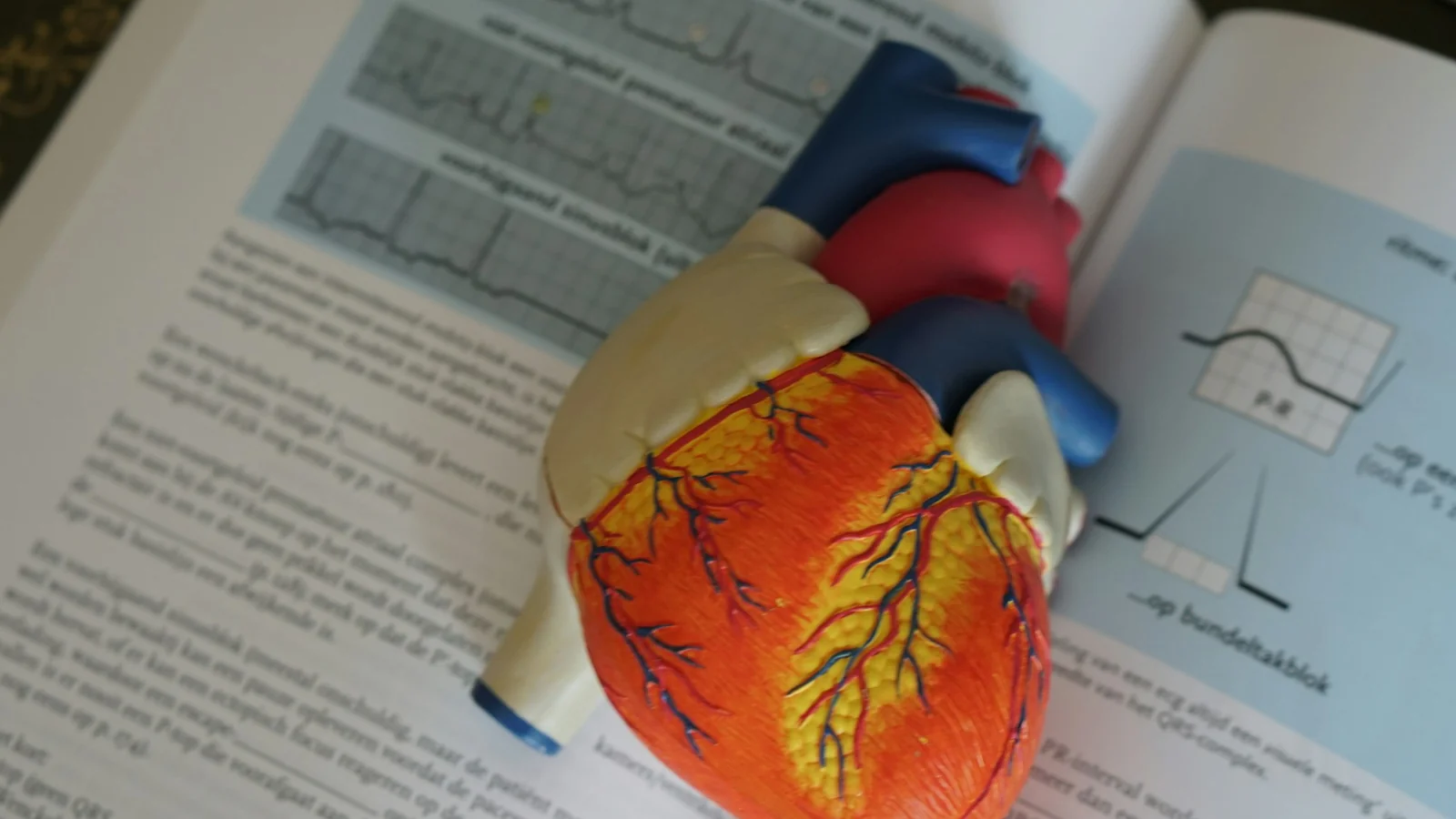
Biology is half the NEET paper, and 90% of it is drawn from NCERT line-by-line. Most aspirants re-read NCERT five times and remember a third. Here is what to do instead.
28 Apr 2026 · 12 min read
Spaced Repetition Explained: From Ebbinghaus to Your Phone
Spaced repetition is the most reliable finding in learning research, and the most-misapplied. Here is what 140 years of memory science actually says — and how to schedule it without losing your weekend.

27 Apr 2026 · 11 min read
Active Recall vs Re-reading: What Learning Science Actually Says
Re-reading feels productive but produces weak retention. Active recall feels harder but builds durable memory. Here is what the research says — and what JEE, NEET, and UPSC aspirants should do about it.