
NEET Biology in NCERT Lines: A Retrieval-First Study Guide
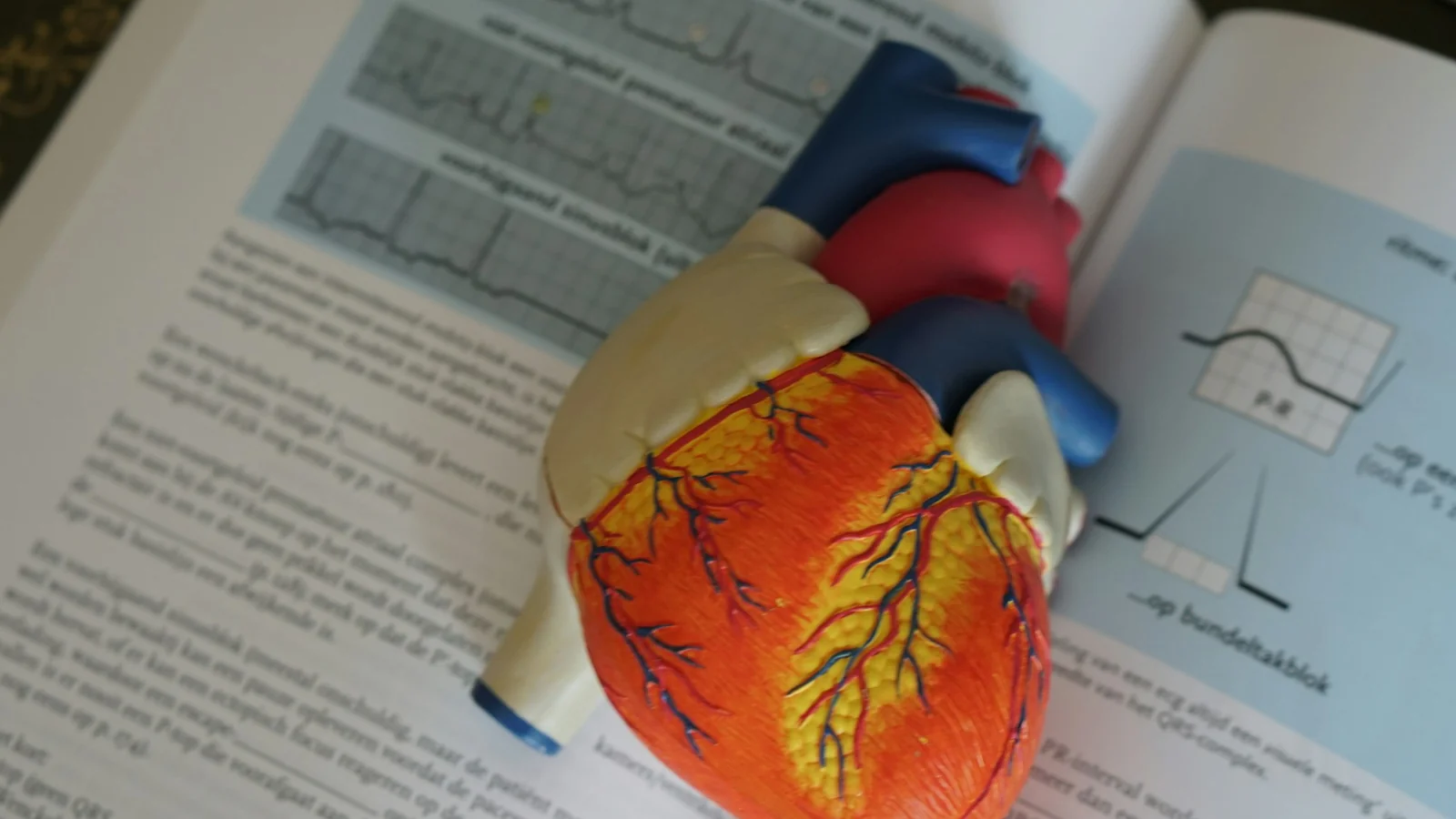
Biology is half the NEET paper. Roughly 90% of it is lifted from NCERT, often line-for-line. Despite that — or because of it — most aspirants re-read NCERT five times and walk into the exam remembering about a third. The fix is not a sixth re-read. It is the retrieval workflow NEET Biology specifically rewards, run on the right schedule. Here is what that looks like.
Why NCERT Biology fights re-reading harder than other subjects
Re-reading is a poor study technique for any subject. It is an especially poor technique for NEET Biology, for three reasons.
First, the volume is too large. The Class 11 and 12 NCERT Biology textbooks combined are over a thousand pages of dense, factual prose. Each chapter contains hundreds of small, testable details — a specific enzyme name, a precise tissue location, a verbatim definition. Re-reading at this scale produces fluency, not retrieval. By the fifth pass, the words feel familiar; the facts have not been extracted.
Second, NEET asks for line-precision. Unlike a JEE Physics question that tests whether you can solve a problem, a NEET Biology question often tests whether you remember the exact phrasing in NCERT. "Which of the following statements about the seminiferous tubules is correct?" The four options paraphrase NCERT lines with subtle changes. Recognition does not save you. Only retrieval does.
Third, NCERT Biology is largely passive when read. Plant Physiology is hundreds of lines of one-direction prose with no derivations to test you. Without converting it into prompts you actively answer, the reading is a passive event — the most expensive kind of study time per unit retention.
What "NCERT-line-precision" actually means
Open the NCERT Class 11 chapter on Photosynthesis. Find the line: "The C4 pathway uses a different primary carbon dioxide acceptor (PEP) compared to the C3 pathway." That single sentence has been the basis of four NEET MCQs since 2018. Each time the question paraphrases it slightly, swapping one word, presenting four near-correct options.
A NEET aspirant who has read this line five times still misses the question if they cannot retrieve the acceptor word — PEP, phosphoenolpyruvate. The question was not "do you understand C4 photosynthesis?" The question was "do you remember the exact NCERT line about the C4 acceptor?"
This level of line-precision is what re-reading does not produce. Reading the Photosynthesis chapter five times generates a comfortable feeling that you "know it." The exam tests something different: can you produce the specific word PEP in 90 seconds with a paraphrased question stem in front of you? That is retrieval, not familiarity.
The implication for study workflow: every retrieval pass should be at NCERT-line granularity. Not "explain photosynthesis" — that is too broad and aspirants always feel they can. The right prompt is "what is the primary CO₂ acceptor in the C4 pathway?" — one fact, one word, one retrieval attempt.
Convert each chapter into prompts, then drill
The single highest-leverage workflow change for NEET Biology is to convert chapters into prompt sets before you re-read.
Concrete: open the Class 11 Plant Kingdom chapter. It runs 22 pages with maybe 40 sub-headings. Each sub-heading becomes one or two prompts:
- "Define algae and list four classes." (sub-heading: Classification of Algae)
- "What pigment is unique to Phaeophyta and what does it do?" (sub-heading: Phaeophyta)
- "Name the spore-bearing structures in mosses." (sub-heading: Bryophytes — Reproduction)
A 22-page chapter compresses to roughly 50 prompts. Drilling 50 prompts closed-book takes 30–40 minutes; re-reading the chapter takes 90 minutes and produces less retention. The math favours the prompts every time.
Then drill the prompts on a schedule: same-day, day 3, day 7, day 14, day 30. The prompts you answer comfortably stop being drilled (mark them green); the ones you miss come back at the next interval. By the third pass, 70% of the chapter is permanent. Re-reading the chapter five times never reaches that point.
High-PYQ-frequency clusters — drill these first
NEET Biology questions cluster heavily around certain topics. Not every chapter is equal. Drilling the clusters first, before fanning out, gets to a workable score fastest.
Botany — high-frequency clusters (drill first)
- Plant Physiology — Photosynthesis, Respiration, Plant Growth Regulators, Mineral Nutrition. The single biggest sub-cluster on NEET Botany.
- Genetics and Evolution — Mendel's experiments, chromosomal basis, molecular biology basics. Heavy line-precision territory.
- Biotechnology — Principles and Processes — restriction enzymes, PCR, vectors. Fact-dense, repeats verbatim from NCERT.
- Reproduction in Flowering Plants — pollination, double fertilisation, embryo development.
Zoology — high-frequency clusters (drill first)
- Human Physiology (Class 11) — every system. Largest weight on NEET Zoology.
- Human Reproduction (Class 12) — gametogenesis, menstrual cycle, reproductive technologies.
- Genetics and Evolution (Zoology side, with crossover into Botany).
- Animal Kingdom — phyla classification with diagnostic features.
The mistake is to drill chapters in NCERT order — Cell Biology first, Plant Kingdom second, Animal Kingdom third — because that is how the textbook is laid out. The textbook is not optimised for NEET frequency. Drill by frequency, not by order. Do Plant Physiology and Human Physiology before Cell Cycle.
The PYQ pattern — how NEET re-uses material
Pull any ten years of NEET PYQs on Plant Physiology and a pattern emerges within an hour. The same NCERT lines reappear, slightly paraphrased, year after year. The C4 acceptor question shows up in 2017, 2019, 2021, 2024. Each time the wording changes; the underlying NCERT line does not.
Treat PYQs as a teaching tool, not just an evaluation tool. Going through ten years of PYQs on a chapter teaches you which NCERT lines the exam keeps coming back to. Those are the lines to drill hardest.
A workable rule: after first-pass studying a chapter, do ten years of PYQs closed-book. Mark every question you got wrong, and trace each wrong answer back to its NCERT line. Re-drill those specific lines next day. The PYQ-to-NCERT-line trace is itself the highest-quality retrieval pass possible.
“
The aspirants who score 660+ are not the ones who read NCERT five times. They are the ones who can produce the exact NCERT phrasing, in 90 seconds, on a question they have never seen.
”
The final 60 days — retrieval only
The same rule that applies to JEE applies to NEET — louder, because Biology is more retrieval-sensitive. The final sixty days before NEET should contain zero new chapters and zero re-reads of full chapters. Only retrieval drills, mocks, and PYQ analysis.
If a chapter is not retrievable by Day -60, accept the marks loss on it and protect the chapters that are. Trying to "add" a new chapter in the final two months almost always lowers your overall score because the time stolen from already-strong chapters causes them to decay.
In practice the final 60 days look like this:
- Day 60 to Day 30 — full PYQ retrieval. Twenty-year PYQs, one chapter per day, closed-book. Trace every wrong answer to the NCERT line. Re-drill those specific lines next day.
- Day 30 to Day 7 — full-length mocks every other day, alternating with mock analysis days. The analysis is where retention actually happens.
- Day 7 to Day 0 — light retrieval on weak chapters identified from mocks. Sleep prioritised. No new material.
This is the schedule most NEET toppers run without naming it. The naming matters because once you name it, you can defend it against the panic to "study more" that costs aspirants their final-month sharpness.
Wrap
NEET Biology rewards line-precision retrieval more than any other subject on any other Indian competitive exam. Re-reading NCERT five times produces familiarity. The exam tests something else.
The aspirants who score 340+ on Biology are not the ones who read NCERT longer. They are the ones who converted NCERT into prompts, drilled the prompts on a schedule, and traced every wrong PYQ back to the NCERT line that caused it. That is the workflow.

28 Apr 2026 · 11 min read
The JEE Revision Plan That Actually Works
Most JEE revision plans collapse under their own weight by November. Here is the plan built around how memory actually behaves — what to do daily, weekly, and in the final 30 days.

28 Apr 2026 · 12 min read
Spaced Repetition Explained: From Ebbinghaus to Your Phone
Spaced repetition is the most reliable finding in learning research, and the most-misapplied. Here is what 140 years of memory science actually says — and how to schedule it without losing your weekend.

27 Apr 2026 · 11 min read
Active Recall vs Re-reading: What Learning Science Actually Says
Re-reading feels productive but produces weak retention. Active recall feels harder but builds durable memory. Here is what the research says — and what JEE, NEET, and UPSC aspirants should do about it.