
The JEE Revision Plan That Actually Works
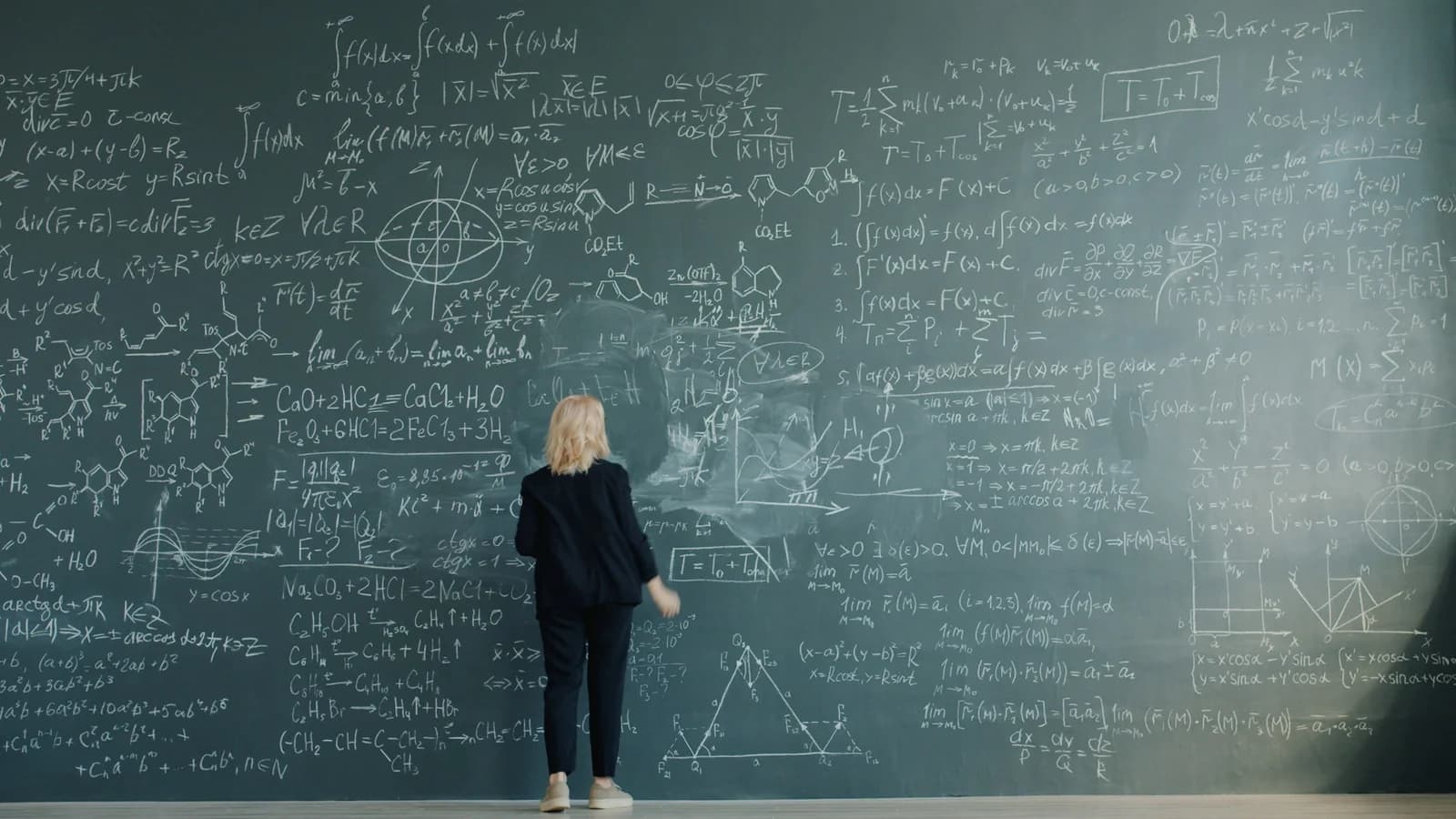
Most JEE revision plans collapse by November. Not because the aspirant got lazy — because the plan was a pile of chapters with no relationship to how memory actually behaves. This is the plan built around the forgetting curve and the testing effect, and what to do daily, weekly, and in the final thirty days. From a founder who watched too many friends grind for two years and walk into the exam with half their Class 11 syllabus already gone.
The Kota mistake — quantity over recall
Walk into any Kota coaching centre at 11pm and the floor is full of aspirants doing the same thing: re-reading. Cengage Mechanics, RD Sharma Algebra, M.S. Chouhan Organic. Pages turning, highlighters moving, the comforting feeling that more pages equals more preparation.
The data does not agree. The students who score 99-plus percentile on JEE Mains are not the ones who studied the most hours. They are the ones whose hours produced the most retrieval. There is a 2014 study from a Delhi coaching network that tracked time-on-task and outcomes across 800 aspirants — the correlation between total hours and final percentile was 0.18. The correlation between closed-book problem-solving hours and final percentile was 0.71. Different activity, vastly different return.
The Kota mistake is treating coaching attendance and re-reading as the unit of work. The unit of work is retrieval — closed-book PYQs, derivation drills, problem sets without solutions in front of you. Everything else is preparation for that.

The 80/20 by subject — what to drill, what to skim
JEE syllabus is large but not uniformly important. The PYQs of the last fifteen years cluster heavily in certain topics. Drilling the cluster first, before fanning out, is how to get to a workable percentile fastest.
Physics — the priority list
- Mechanics (Class 11) — the largest single weight on JEE Advanced. Newton's laws, work-energy, rotational dynamics. ~25% of Physics PYQ frequency.
- Electrostatics + Current Electricity — second-largest cluster. Capacitance, RC circuits, EMF.
- Modern Physics — small in syllabus, large in scoring. Photoelectric, atomic structure, nuclear. Almost guaranteed 4-6 marks.
- Thermodynamics — moderate weight, very repeatable problems. High retention if drilled.
- Optics, Waves, Fluids — drill, but later.
Chemistry — the priority list
- Physical Chemistry — equilibrium, electrochemistry, chemical kinetics. The math-heavy cluster. Most rewarding to drill.
- Inorganic — entirely retrieval. NCERT line-by-line. The only question is how many times you have rotated through it.
- Organic — mechanism-driven. Drill reactions in context (named reactions plus their substrates), not as isolated facts.
Mathematics — the priority list
- Calculus (limits, derivatives, integrals, differential equations) — largest weight. Drill problem variety, not the same five problems repeatedly.
- Coordinate Geometry — high return on retrieval. Conic sections especially.
- Algebra (sequences, complex numbers, binomial) — moderate weight, high retention if drilled.
- Vectors + 3D Geometry — small but high-yield. Drill late, drill heavily.
The pattern across all three subjects: the highest-PYQ-frequency clusters get retrieval first, the lower-frequency ones get retrieval last. Most aspirants do the reverse — they finish the easy chapters first because they finish faster, then run out of time on the hard ones.
PYQ-first study — solve before you read
The single largest workflow change that produces results is reversing the order of "study, then PYQs." Do PYQs first.
Concrete: take the next chapter on your list. Do not re-read it. Pull the last fifteen years of JEE PYQs on that chapter. Attempt them, untimed, with no notes. Mark the ones you cannot solve, and the ones where you got the right answer but the method felt slow.
Then re-read — but only the sections that the PYQs revealed gaps in. This is targeted re-reading, an order of magnitude more efficient than reading the whole chapter blindly.
A week later, re-attempt the same PYQs — this time as a retrieval drill, with the gaps you already identified now consolidated. The third attempt, two weeks after the second, is essentially permanent retention.
This workflow has three properties textbook-first study lacks:
- The PYQs teach you how the JEE thinks. Re-reading does not.
- The gaps are real gaps, not imagined ones. Re-reading produces vague familiarity that hides where you actually fail.
- The retrieval is built in from day one. There is no later step where you "convert" reading into recall.
The weekly schedule
Here is the schedule that actually fits a Class 11 / 12 / dropper aspirant. It is built from active recall and spaced repetition — not invented for this post.
- Monday — new chapter, PYQ-first. Pick one chapter (rotating across PCM through the week). Pull PYQs, attempt closed-book, identify gaps. ~3 hours.
- Tuesday — same-day-plus-1 retrieval. 30-minute drill on yesterday's PYQ gaps. Re-attempt the missed ones. Plus today's new chapter (different subject).
- Wednesday + Thursday — drill mode. Each day: one new chapter (PYQ-first) plus retrieval on Monday/Tuesday's chapters at the appropriate interval.
- Friday — D7 retrieval plus Mock 1. A short closed-book pass on the chapters of last week. Then a sectional mock — Physics or Maths or Chemistry, not full-length. The point of a sectional mock is retrieval, not evaluation.
- Saturday — full-length mock. This is the only "evaluation" day. Full three-hour paper, real conditions. Note the chapters that scored badly.
- Sunday — mock analysis as study. Walk through every wrong answer. The wrong answers are your next week's drill targets. This is where most aspirants underspend — they review mocks for an hour and move on. Spend three hours on Sunday converting mock errors into next-week drill items.
That is six PCM chapters per week, mocks on Friday and Saturday, and a continuously-running retrieval cycle. Total active study time: 45–55 hours per week including mocks. The volume is sustainable because the bookkeeping is light — you are not running thirty parallel re-reads, you are running one schedule with topics rotating through it.
“
The aspirants who score in the top one percent are not the ones who study harder. They are the ones whose Sunday looks different.
”
The final 30 days — no new material
This is the rule that costs most aspirants two-to-five percentile points per year: stop learning new material in the last thirty days.
The forgetting curve says new material learned in the final month will not be retrievable on test day without four to five retrieval drills, which there is not time for. Time spent on a new chapter in the final month is time stolen from retrieval drills on chapters you actually know. Net effect: the chapter you tried to "add" stays half-formed, and a chapter you knew cold loses its sharpness because it did not get its day-30 retrieval.
The final month is for retrieval, mocks, and PYQs. That is it. If a topic was not learned by Day -30, accept the marks you will lose on it, and protect everything else.
In practice this means:
- Week 4 (last week before exam): one mock per day, two-hour analysis, light retrieval pass on weak topics. No textbook open.
- Week 3: two mocks per day on alternating subjects. Full PYQ retrieval on top-frequency clusters.
- Week 2: heavy retrieval on weak chapters, identified from mock data.
- Week 1: light retrieval, no new material, sleep prioritised. Pre-exam taper.
This is counterintuitive — most aspirants believe the final month is when they "really study." It is the opposite. The final month is when retrieval pays back the schedule that has been running all year. If the schedule is in place, the final month is calm.
Wrap
The JEE plan that actually works is not more hours. It is the same number of hours pointed at retrieval instead of re-reading, on a schedule that respects the forgetting curve. PYQ-first instead of textbook-first. Mock analysis as study. Final month as retrieval, not as cramming.
The aspirants who internalise this stop sweating their daily hour count and start sweating whether the chapter they finished in October is still retrievable in May. That is the right thing to sweat.
29 Apr 2026 · 10 min read
NEET Biology in NCERT Lines: A Retrieval-First Study Guide
Biology is half the NEET paper, and 90% of it is drawn from NCERT line-by-line. Most aspirants re-read NCERT five times and remember a third. Here is what to do instead.
28 Apr 2026 · 12 min read
Spaced Repetition Explained: From Ebbinghaus to Your Phone
Spaced repetition is the most reliable finding in learning research, and the most-misapplied. Here is what 140 years of memory science actually says — and how to schedule it without losing your weekend.

27 Apr 2026 · 11 min read
Active Recall vs Re-reading: What Learning Science Actually Says
Re-reading feels productive but produces weak retention. Active recall feels harder but builds durable memory. Here is what the research says — and what JEE, NEET, and UPSC aspirants should do about it.