
Active Recall vs Re-reading: What Learning Science Actually Says
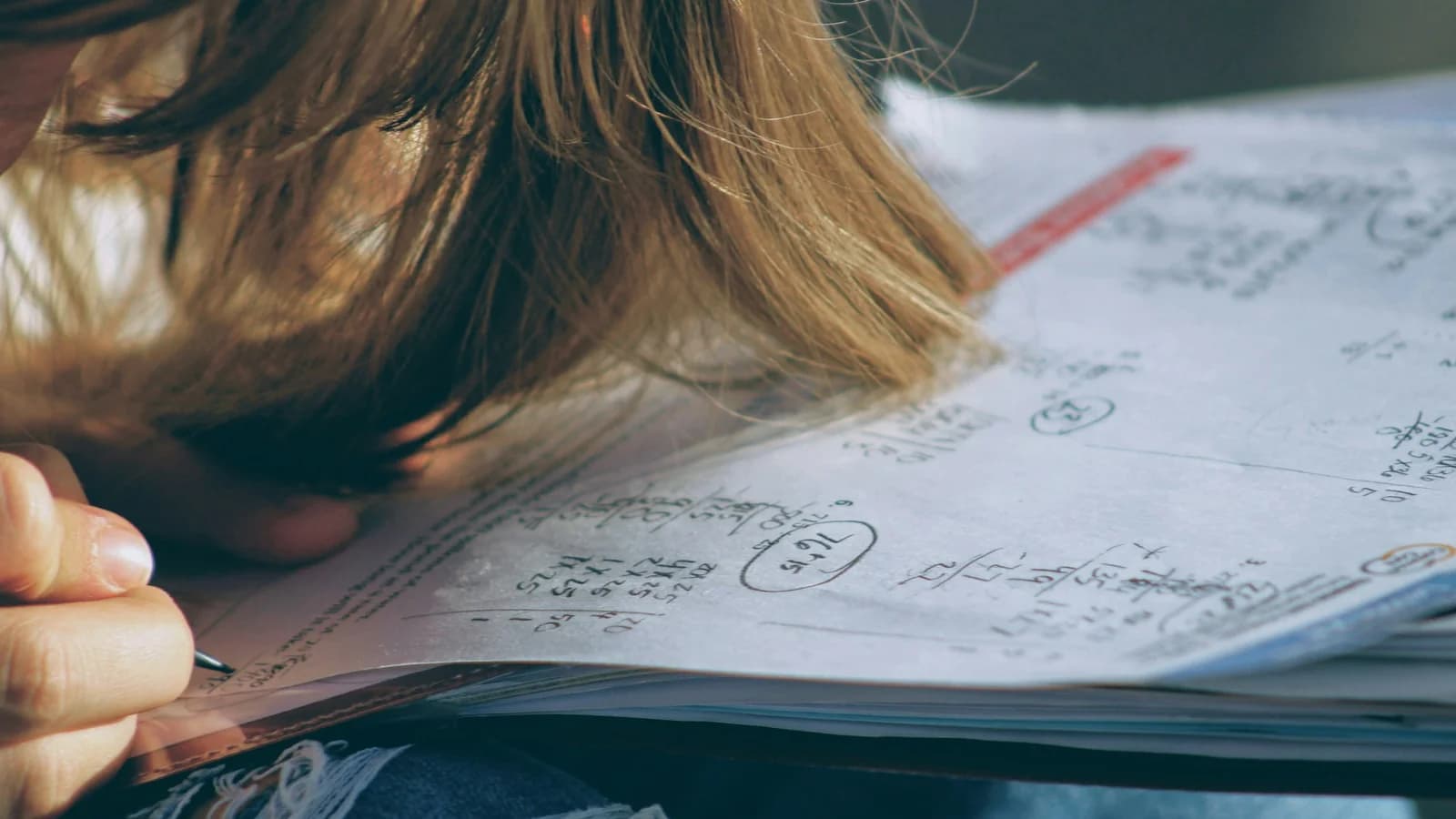
You have a feeling re-reading is working. You finish a chapter, the words feel familiar, and you move on. Then on test day the chapter is a fog. The gap between how studying feels and what it produces is the most expensive trick the brain plays on students. The research that explains it has a name: active recall.
Re-reading is the slowest way to learn
Walk into any library during finals week and you will see the same pattern: a textbook open, a highlighter moving, a student reading the same page they read yesterday. It feels like work. It feels like progress. And by every measure cognitive psychologists have devised, it is barely working.
In the most-cited study on this question, Roediger and Karpicke (2006) ran a simple experiment. Two groups read the same prose passage. One group read it four times. The other read it twice and then was tested on it twice. Both groups thought the re-reading group would do better on a final test held days later. Both groups were wrong. The re-readers had higher confidence; the testers had higher retention. By a wide margin.
This is not a small effect. It has been replicated across topics, ages, formats, and decades. The conclusion is consistent: the act of producing an answer from memory builds stronger memory than the act of reading the answer. The phenomenon is called the testing effect, or in its more practical framing, active recall.
“
Retrieval practice produces more learning than additional study, even when learners feel the opposite is true.
”
The "even when learners feel the opposite" part is what costs students months. The brain is a poor judge of its own performance. Familiarity registers as competence. Recognition registers as recall. By the time the exam reveals the gap, the only options left are panic and over-correction.
What "active recall" actually means
The term sounds clinical. The practice is simple.
Active recall is closing the source — book, lecture, PDF — and trying to produce the answer without help. The trying is the work. Whether you succeed on the first attempt is almost beside the point.
In practical study, active recall takes a few familiar forms:
- Closed-book recall. Read a chapter once. Close it. Write down everything you can remember. Compare. Repeat next day for what you missed.
- Question generation. Turn each sub-heading into a question. Drill the questions on a separate sheet from the answers.
- Teaching out loud. Explain the concept to an empty room, a sibling, or your phone's voice memo. The act of constructing an explanation is retrieval.
- Practice papers without notes. Most aspirants treat papers as testing-of-readiness. They are also study-themselves — every question you attempt without notes is a recall trial.
- Voice-driven sessions. A new format. The AI asks, you answer aloud, you get graded. Same retrieval mechanism, less friction than self-administered Q&A.
The unifying property is friction. Active recall feels harder than re-reading because it is harder. That difficulty is not a bug — it is the mechanism. Cognitive scientists call it desirable difficulty: the kind of effort during practice that hurts performance in the moment and helps it on the test day weeks later.

The forgetting curve is doing the heavy lifting
Re-reading and active recall both decay. The difference is how steeply.
The forgetting curve
Retention falls fast. Retrieval puts it back.
The grey curve is what happens to memory when you read material once and let it sit. By day three, retention has dropped below 40%. By day seven, below 30%. The Ebbinghaus forgetting curve — first plotted in 1885 — has been replicated thousands of times. It is one of the most reliable findings in psychology.
The orange curve is what happens when you space out short retrieval attempts: a one-minute drill at day one, another at day three, another at day seven. Each attempt looks small. Each attempt resets the curve. Combined, they pull retention to near-100% with a tiny fraction of the time you would spend re-reading.
This is why "active recall" and "spaced repetition" are usually mentioned in the same breath. Active recall is the unit of work. Spaced repetition is the schedule. One without the other is half the system.
For Indian exam prep this is not a theoretical point. The JEE, NEET, and UPSC syllabuses are large enough that no one can re-read everything in the final month. Either you build the retention earlier with retrieval, or you walk into the exam with a freshly-decayed brain.
What this looks like in practice — JEE, NEET, UPSC
The principle is universal. The application is exam-specific.
For JEE aspirants
Three subjects, two-and-a-half years of material, mock tests as feedback. The pattern that wastes time is: re-read the chapter → solve problems → check answers → move on. The pattern that builds memory is: solve problems first (or attempt PYQs blindly), let the failures surface gaps, then re-read only the parts you missed, and re-test the gap a day later.
Concrete: instead of re-reading Cengage Mechanics again, drop the chapter into a voice-driven session and answer derivations out loud while you walk to coaching. The walking is going to happen either way. Make it active.
For NEET aspirants
Biology is half the paper. Re-reading NCERT line-by-line is the most common, least efficient way to study it. The line-by-line knowledge has to be retrieval-ready, not recognition-ready, because the paper tests precisely that.
Take any NEET Biology chapter and convert each sub-heading into a one-line prompt. Drill the prompts. The prompts that you can't answer cleanly in 10 seconds are the ones to re-read — not the whole chapter.
For UPSC aspirants
The current-affairs problem is fundamentally a retrieval problem. You are not failing because you didn't read the Vision IAS monthly — you read it. You are failing because you read it once and the brain dropped 70% by week two. The fix is shorter, more frequent retrieval drills on the same material, not a second pass through the monthly.

The counter-argument — when re-reading is fine
Active recall is not a religion. There are study moments where re-reading is the right tool.
When you genuinely do not understand a concept yet — when reading the textbook explanation is the first time the idea is entering your head — re-reading and re-watching and slowing down is appropriate. You can't retrieve information you never encoded. The first pass through a topic is study; the second through tenth pass should be retrieval.
The mistake is treating the first-pass tool as if it works for the tenth pass. It doesn't. Once a concept is in your head — even shakily — every subsequent minute spent re-reading is a minute that would have produced more retention as retrieval.
A workable workflow
If you take one thing from this essay, take this sequence:
- First exposure — read, watch, or attend lecture once. Note key terms.
- Same-day retrieval — close the source. Write or speak everything you remember. Note gaps.
- Day 1 retrieval — short prompt drill. 10 minutes max. Re-read only confirmed gaps.
- Day 3 retrieval — same prompts plus any new ones the gaps revealed.
- Day 7 and Day 14 retrieval — quick passes. By now most prompts answer themselves.
- Pre-exam pass — final retrieval drill, not a re-read.
The sequence works for any subject. It works on paper, with flashcards, or with voice-driven AI sessions. The format is replaceable; the structure is not.
Wrap
The deepest cost of re-reading is not the time spent on it. It is the time not spent on retrieval — the practice that would have built durable memory in a fraction of the hours. Studying is not how long you sit with the book open. It is how often you produce the answer without it.
Active recall is the producing.
29 Apr 2026 · 10 min read
NEET Biology in NCERT Lines: A Retrieval-First Study Guide
Biology is half the NEET paper, and 90% of it is drawn from NCERT line-by-line. Most aspirants re-read NCERT five times and remember a third. Here is what to do instead.
28 Apr 2026 · 11 min read
The JEE Revision Plan That Actually Works
Most JEE revision plans collapse under their own weight by November. Here is the plan built around how memory actually behaves — what to do daily, weekly, and in the final 30 days.
28 Apr 2026 · 12 min read
Spaced Repetition Explained: From Ebbinghaus to Your Phone
Spaced repetition is the most reliable finding in learning research, and the most-misapplied. Here is what 140 years of memory science actually says — and how to schedule it without losing your weekend.