
JEE Main 2026 Without Calculators: How to Prep for the New Rule
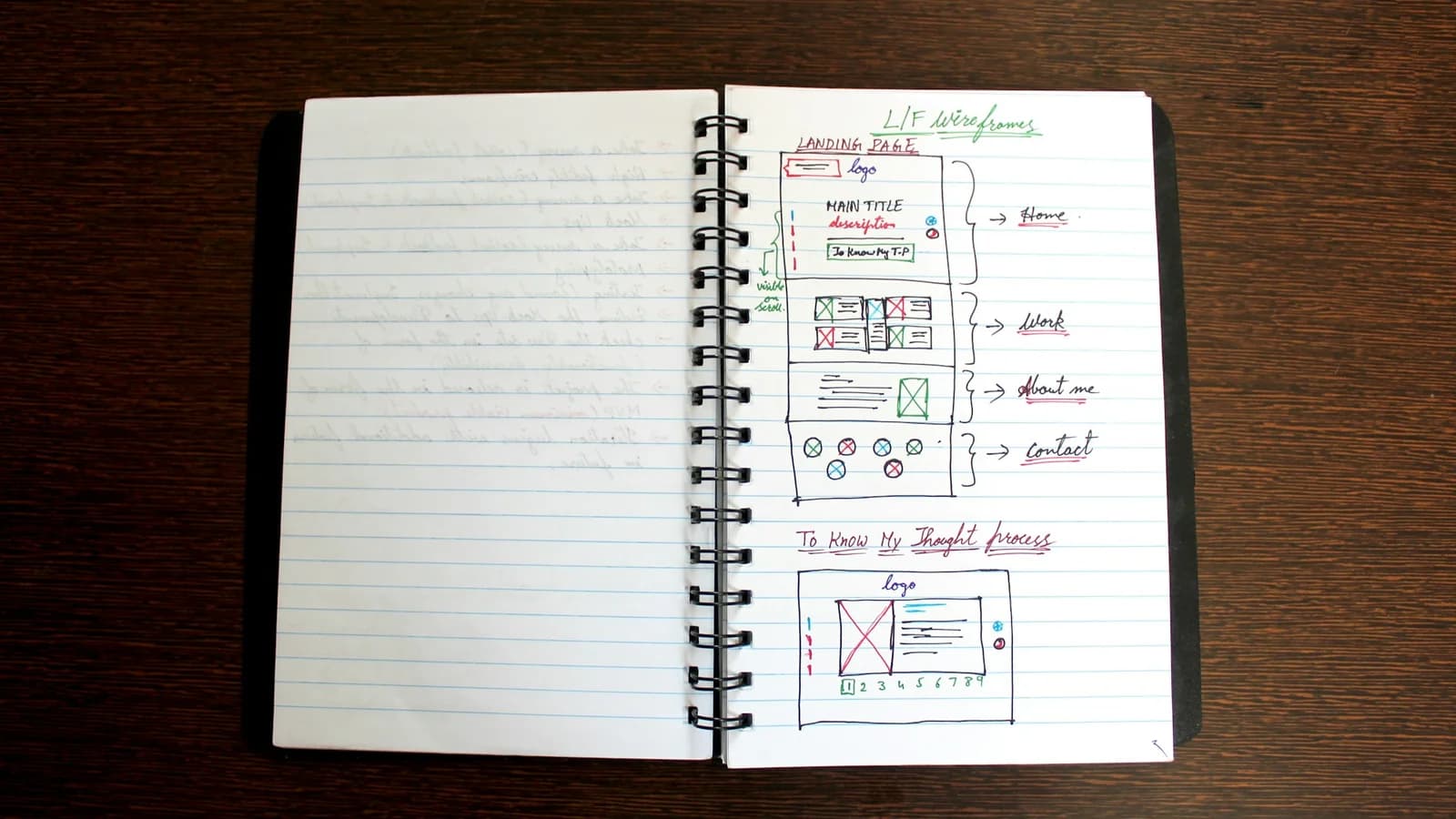
Starting January 2026, NTA closed the door on calculators in JEE Main. No physical device at the centre. No on-screen calculator on the interface. For aspirants who built their problem-solving on a Casio fx-991, this is a real disruption — and a quiet advantage for those who train for it now.
What changed and why it matters
The JEE Main 2026 information bulletin says it plainly: physical calculators are not permitted inside the examination centre, and NTA will not provide an on-screen calculator. This is in addition to the new application-stage requirements — APAAR ID, live photo capture, disability self-declaration — and 33 new exam centres added across India.
The application changes are paperwork. The calculator change is preparation. For two decades, JEE numerical sections were scaffolded around the assumption that a candidate could compute logarithms, cube roots, and trigonometric values on demand. That assumption is gone.
The answer is not to grumble. NTA has already calibrated the 2026 paper around the new tool set — meaning the questions will be designed to yield "clean" numerical answers when solved properly, and to penalise candidates who waste minutes on brute-force arithmetic. The candidates who will outperform are the ones who lean into mental-math discipline and dimensional shortcuts. The rest will lose three to four minutes per numerical question simply because they reach for a tool that is no longer there.
Three habits that replace the calculator
The candidates who score 250+ on JEE Main 2026 will have rebuilt three habits. None of them are advanced. All of them are trainable in two months.
1. Dimensional analysis as the first move
Before you compute anything, eliminate options whose units don't work. Half of JEE physics numerical questions can be reduced to two options purely on dimensional grounds. The instinct to "just calculate" is the instinct that costs you the most time.
Train this by taking 50 PYQ numerical questions and only doing dimensional checks — no actual computation. You'll find that on roughly 40 percent of them, the dimensional check alone narrows you to two options. On 15 percent it lands the answer outright.
2. Log, antilog, and trig from memory
Memorise the top-50 numerical patterns. This is dull work for two weeks and pays back across all three years of competitive exams. The minimum set:
- Squares 1–30, cubes 1–15
- Common logs of 2, 3, 5, 7 (0.301, 0.477, 0.699, 0.845)
- Sin/cos of 0, 30, 45, 60, 90 (and tan, cot, sec, cosec where they don't blow up)
- Powers of 2 up to 2^16, powers of 10 to 10^9
- Conversion factors: 1 eV = 1.6 × 10^-19 J, 1 atm = 1.013 × 10^5 Pa, etc.
Drill these with active recall — the testing effect applies to numerical patterns the same way it applies to chemistry mechanisms.
3. Approximation by order of magnitude
The third habit is order-of-magnitude estimation. If a problem yields an answer of "around 10^-19", you don't need three significant digits — you need the right exponent and the right leading digit. Work backwards from the multiple-choice options to figure out how precise you actually need to be. Most JEE numerical options are spaced at least one significant figure apart, so two-digit accuracy is usually enough.
A 4-week mental-math protocol
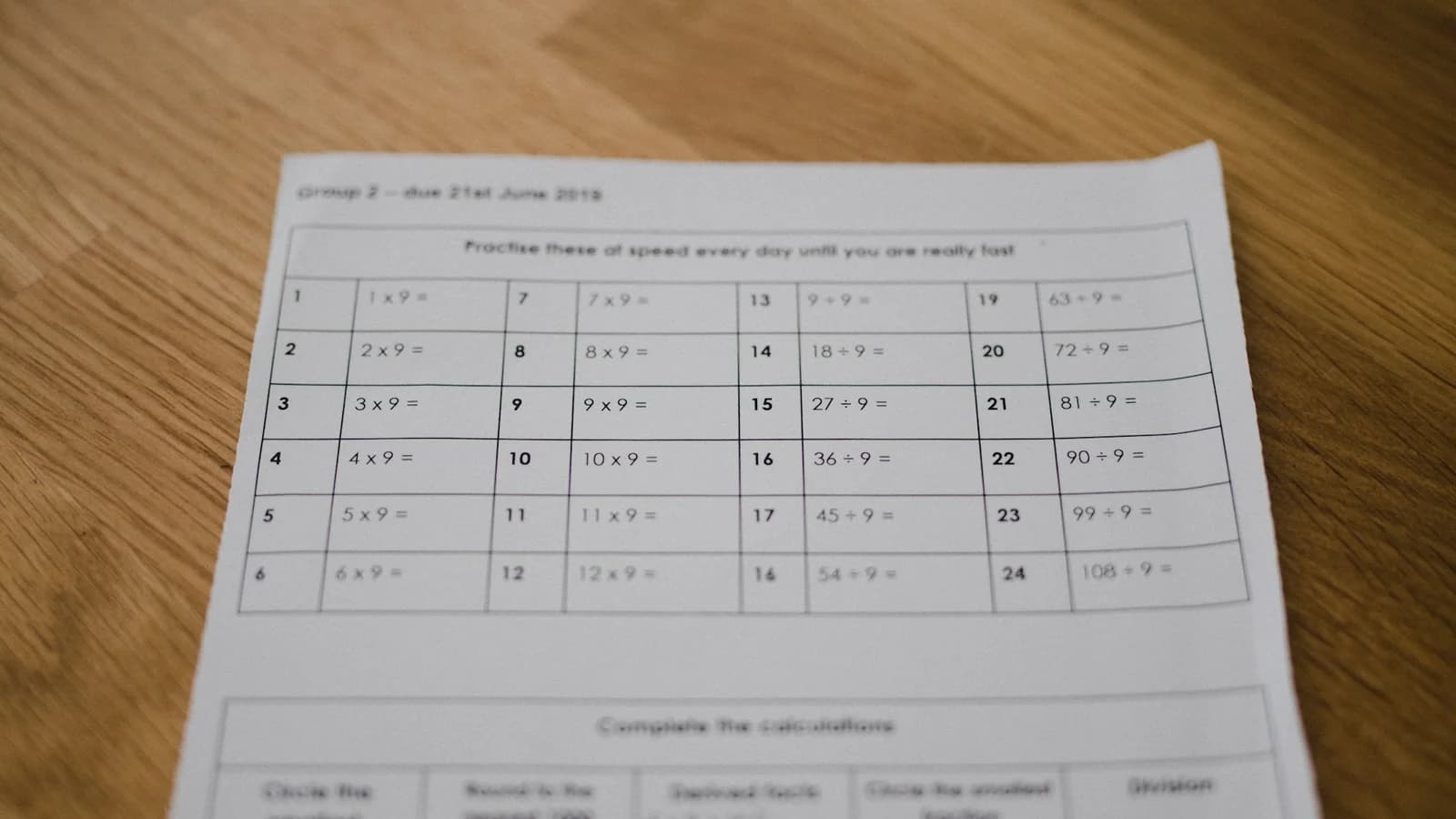
If you have a January or April attempt left, or if you're prepping for JEE Advanced after Mains, four weeks of structured mental-math drill changes your effective paper speed by 20–30 percent. Here is the protocol that works.
Week 1 — squares, cubes, primary log/trig values. Twenty minutes daily. Use spaced retrieval: write the question, close your eyes, retrieve the answer, check, mark right or wrong. Re-test the wrong ones the next day. By the end of week one, you should know every square 1–30 and every cube 1–15 cold.
Week 2 — derived values and common conversions. Powers of 2, log tables for primes 2/3/5/7, eV-to-Joule, atm-to-Pa, 1 mole / Avogadro, c, e, m_e, m_p. Keep retrieving. Add a 5-minute "speed test" at the end of each session — 30 questions in 4 minutes.
Week 3 — JEE PYQ numerical without calculator. Take 60-minute blocks of past-paper numerical questions and work them with no aid except your now-loaded mental tables. Start with 2018–2020 papers (calculator-allowed era). You'll feel the speed gap close.
Week 4 — full-length mocks under no-calculator conditions. Three full mocks this week, each followed by a 90-minute analysis using the mock analysis ledger approach. Tag every wrong question by its root cause. Mental-math slips will be a separate root cause for the first two mocks; by mock three they should drop sharply.
Where the calculator ban actually hurts
Three areas where the ban genuinely changes problem-solving, and the workaround for each.
Modern Physics — energy calculations involving 13.6 eV, hf - φ work-function problems, de Broglie wavelengths. Workaround: memorise 13.6 eV decomposed by orbit (13.6, 3.4, 1.51, 0.85). Memorise hc = 1240 eV·nm. Most modern-physics numericals collapse to one-line plug-ins.
Chemistry — equilibrium and thermodynamics. Kp/Kc, ΔG calculations, pH problems with non-trivial Ka. Workaround: memorise the top-20 Kw, Ka, Kb values; train log shortcuts for pH = -log[H+]; memorise R = 8.314 J/mol·K and R = 0.0821 L·atm/mol·K and which one to use when.
Coordinate geometry distance and projection problems. Square roots, cosine values at unusual angles. Workaround: memorise √2 ≈ 1.414, √3 ≈ 1.732, √5 ≈ 2.236, √7 ≈ 2.646, √10 ≈ 3.162. The first four cover ~80 percent of cases.
“
The brain is far better at memorising small, related sets of numbers than at calculating from scratch under pressure.
”
What this means for your study stack
Most JEE coaching content was written when calculators were allowed and never updated. The PYQ booklets you bought from Allen or Aakash before 2025 do not flag which questions become harder under the new rules. You have to filter for them yourself.
The fastest workflow we've seen: take a chapter (say, Modern Physics), pull the last six years of NEET + JEE Main PYQs on it, and grade each problem on a "calculator-required" axis. About 30 percent of questions will need a calculator workaround. Those are your training set. Drill them mentally over the next two weeks.
This is also where Revizer earns its place in your stack. The app generates JEE-tuned voice retrieval prompts that include the kind of numerical conversions you'd otherwise practise in your head — except you have to say the answer out loud, which engages the production effect on top of the testing effect. The combined retrieval + articulation drives mental-math fluency faster than silent practice.

Wrap
The calculator ban is not a problem if you start preparing for it now. It will be a serious problem if you turn up in January or April expecting on-screen support. Two months of structured mental-math drill, paired with conceptual retrieval and dimensional discipline, closes the gap completely — and on paper, it's a quiet advantage. While the unprepared half of the field is fumbling for a tool that isn't there, you'll be three minutes ahead per question.
28 Apr 2026 · 11 min read
The JEE Revision Plan That Actually Works
Most JEE revision plans collapse under their own weight by November. Here is the plan built around how memory actually behaves — what to do daily, weekly, and in the final 30 days.

27 Apr 2026 · 11 min read
Active Recall vs Re-reading: What Learning Science Actually Says
Re-reading feels productive but produces weak retention. Active recall feels harder but builds durable memory. Here is what the research says — and what JEE, NEET, and UPSC aspirants should do about it.
29 Apr 2026 · 9 min read
CAT Mock Analysis Without the Busywork: A System That Actually Works
Most CAT aspirants spend three hours on a mock and twenty minutes 'reviewing' it. Here's the analysis system that turns each mock into a measurable score gain.