
CBSE Class 12 2026: Prepping for 50% Competency Questions
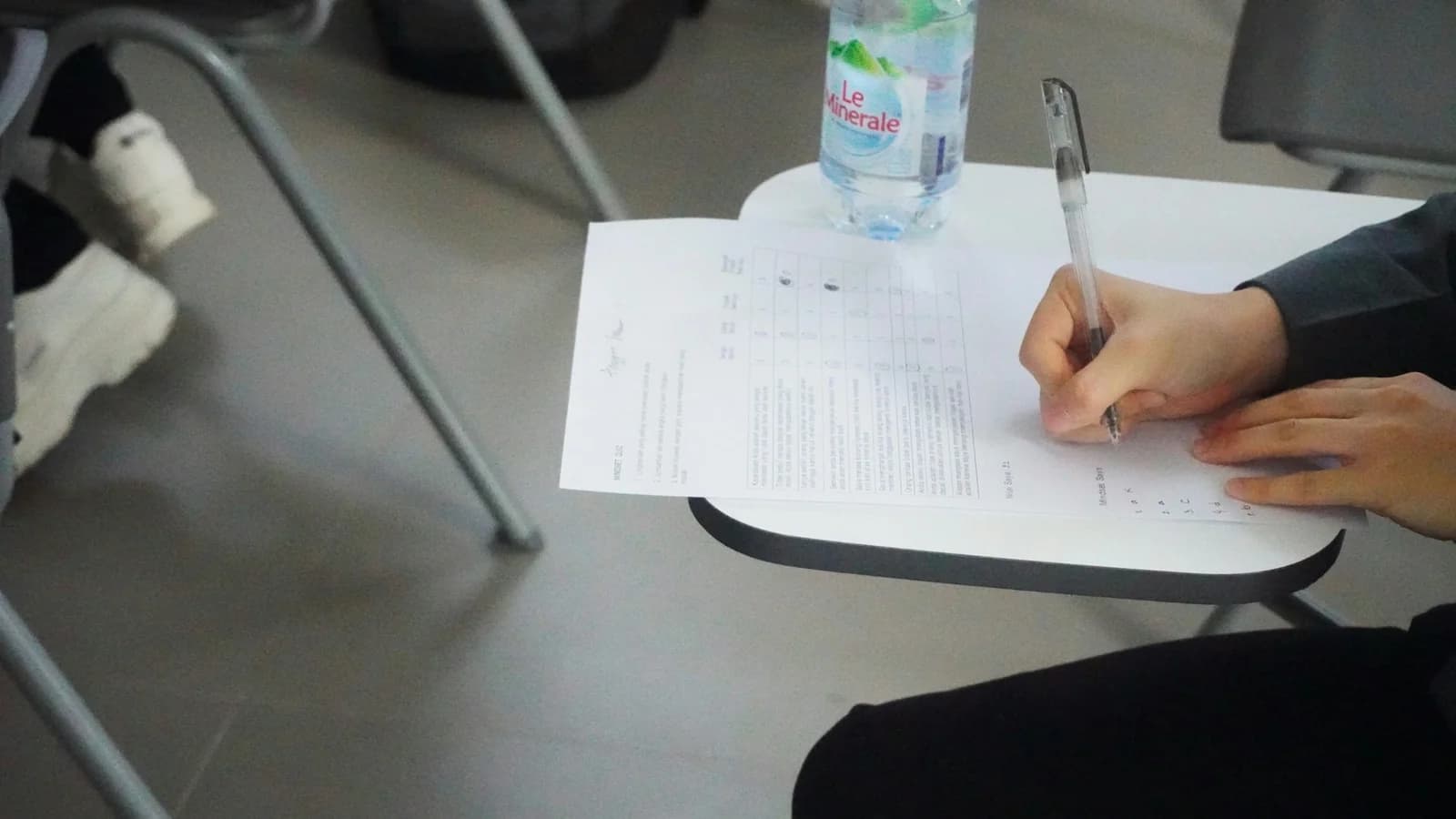
The CBSE Class 12 paper that ran from February 17 to April 10, 2026 was not the paper students prepared for. Half the marks now go to competency-based questions — case studies, source-based items, applied MCQs. Descriptive answers, the old comfort food of board prep, dropped to 30 percent. The students who scored above 95 understood this shift early. The ones who studied the same way as 2022 are seeing their marks tomorrow.
What CBSE actually changed for 2026
The 2026 board pattern, finalised in early 2025, made three structural changes to Class 12 papers that matter for preparation:
- Half the paper is now competency-based. Case-based questions, source-based items, scenario MCQs, and assertion-reason combinations. Up from roughly 20 percent in the 2022 paper.
- Descriptive question weight dropped from 40 to 30 percent. The long-answer "explain in 150 words" format is no longer the bulk of the paper.
- Internal evaluation moved online. Answer scripts are now graded through a digital marking system rather than the traditional manual model, which means partial-credit interpretation is more standardised.
A fourth change — practical exams run by external examiners with same-day mark upload — affects schools more than students, but it does mean lab and project grades are now harder to inflate.
The shift mirrors what NEP 2020 has been pushing for five years: the move from rote recall to applied understanding. CBSE was the slowest of the major boards to comply. 2026 is the year it caught up.
What "competency-based" actually means
The term gets thrown around to the point of vagueness. Here is what it means in the CBSE context, with concrete examples.
Case study (4 marks, three sub-questions). A 100–150 word passage describing a real-world scenario, followed by three or four sub-questions that require you to apply chapter concepts to that specific case. In Physics, a passage might describe a defective transformer in a village substation; the sub-questions ask you to calculate efficiency, identify the cause of energy loss, and suggest a remedy. The passage has all the data; your job is to know which formula to deploy and why.
Source-based (3 marks). A diagram, graph, equation, or short quote — followed by questions that require you to read meaning out of it. Heavy in Biology and History especially. The skill being tested is interpretation, not memorisation.
Assertion-reason (1 mark). Two statements; choose whether assertion + reason are both true and the reason explains the assertion, both true but unrelated, etc. The trap here is that the assertion sounds like a standard textbook statement, so students answer reflexively without checking the logical link.
Scenario MCQs (1 mark each). Single-correct multiple choice, but framed inside a paragraph of context rather than a bare formula or definition. Forces you to extract the relevant data and apply, rather than pattern-match a question stem.
These four formats now make up about 50 percent of marks. The remaining 50 percent are descriptive long-answer (30 percent) and short-answer plus internal assessment (20 percent).

How to actually prep for the new paper
Three concrete shifts in how you study.
1. Make NCERT exemplars your default question bank
The NCERT Exemplar Problems book — the green one most CBSE students buy and never open — is the closest thing CBSE has to an official competency template. The questions there were designed for exactly the format that 2026 codified. If you've solved every NCERT chapter exemplar problem and verified your answers, you have already prepared for ~70 percent of the competency-style questions you'll see.
Most students skip Exemplar in favour of "guide books" by Allen, S. Chand, or Pradeep. Those guides are still useful for reinforcement, but they're not calibrated to the 2026 pattern. Exemplar is.
2. Do at least 100 case studies per subject from sample papers
CBSE released the 2026 sample paper for each subject in September 2025. Beyond that, every major coaching publisher (Educart, Oswaal, Arihant) has put out competency-focused practice books for the new pattern. Pick one. Solve at least 100 case-study questions per subject — not in one sitting, but spread across your revision phase.
The point is exposure. Case studies look intimidating until you've seen 50 of them, after which the underlying structure becomes obvious: identify the chapter, locate the relevant equation, plug in the data, answer the sub-questions in order. The first 30 are slow. The next 70 are calibration.
3. Practise the "explain to a junior" drill
This is the highest-leverage drill we know for competency questions, and it's free.
Pick any chapter. Imagine a Class 11 student has just walked into your room and asks, "Why does this happen?" Explain the chapter's core concept, in your own words, in two minutes. No notes. No textbook. No diagrams.
If you can't, you don't actually understand the chapter — you've memorised vocabulary. Competency questions are designed to expose exactly this gap. The drill catches it before the exam does.
Pair this with active recall and voice-based revision — speak the explanation aloud, ideally to a friend or sibling. The combined retrieval + articulation forces understanding to surface in a way silent re-reading never will.
Subject-by-subject competency-question hot zones
A short field guide to where competency questions are densest in each subject.
Physics. Case studies cluster around Electromagnetic Induction, Optics (especially lens combinations), Modern Physics (photoelectric effect framed as a real device), and Communication Systems. Memorise the formulas, then practise applying them to unfamiliar device descriptions.
Chemistry. Source-based items in Organic Chemistry (a reaction shown with a missing reagent or product), case studies in Electrochemistry (battery efficiency scenarios), and assertion-reason heavy on Coordination Compounds. The trap in Chemistry is partial-credit — write the mechanism, not just the answer.
Biology. Case studies on Genetics (pedigree analysis given a family scenario), Human Reproduction (clinical scenarios about fertility or hormonal regulation), and Biotechnology (a described GMO experiment). NCERT line-precision is necessary but not sufficient — you need to apply the line.
Mathematics. Probability case studies, application of Continuity/Differentiability to real-world rate problems, and matrices in transportation/diet-allocation contexts. Read each case study twice before solving. Most wrong answers in Math case studies come from misreading, not from a math gap.
Accountancy and Business Studies. Almost the entire paper is now applied — short scenarios that test whether you can identify the right entry, ratio, or principle in context. Rote definitions will not survive.
“
Education must move from how much students know to whether they can apply what they know to unfamiliar situations.
”
What changes in the last 30 days
If you're reading this with 30–60 days to go before your next CBSE exam (the 2026–27 batch), the prep stack tightens to:
- Two competency-paper passes per subject. Solve a 2026 sample paper or post-2025 mock; mark every question you got wrong, then solve a second similar paper a week later. This is your application calibration.
- One full NCERT line-by-line revision per subject. This is the encoding base. Don't skip it just because you've done it before — your memory is leakier than you think.
- One drill day for assertion-reason and MCQs. These are the highest-density per-minute scoring questions. A 90-minute focused session per subject closes the easy-marks gap.
- The "explain to a junior" drill, once per chapter. Five minutes per chapter, aloud, no notes. The chapters where you stumble are your study plan for the next day.
Internal assessment should already be locked. If it isn't, it's a separate fire — talk to your subject teacher about portfolio gaps before the school's submission window closes.

Wrap
The 2026 CBSE Class 12 paper isn't harder than the 2022 paper. It's different. Students who recognise the difference and recalibrate their prep — exemplar problems, case-study practice, application-first drills — outperform students with the same content knowledge but the old preparation pattern. The chapters didn't change. The questions did. Adjust accordingly.
29 Apr 2026 · 10 min read
The Testing Effect: Why Retrieving Feels Harder But Works Better
The testing effect is the single most replicated finding in learning science. Here's what it means, why students avoid it, and how to use it for JEE, NEET and UPSC.

27 Apr 2026 · 11 min read
Active Recall vs Re-reading: What Learning Science Actually Says
Re-reading feels productive but produces weak retention. Active recall feels harder but builds durable memory. Here is what the research says — and what JEE, NEET, and UPSC aspirants should do about it.

29 Apr 2026 · 11 min read
CBSE Class 10 Two-Exam System 2026: Should You Take the Improvement Exam?
CBSE Class 10 now has two board exams — February main and May improvement. Phase 2 runs May 15-21, 2026. Here's the strategy for deciding whether to attempt it.